Showing posts with label handling. Show all posts
Sunday, June 12, 2011
The advantages of filling up your tyres with nitrogen
Today we will discuss filling up your tyres with nitrogen. It does not only have advantages during regular driving, but also during racing and drifting.
Labels:
handling,
suspension,
wheels
Friday, June 10, 2011
How to do backwards entries.
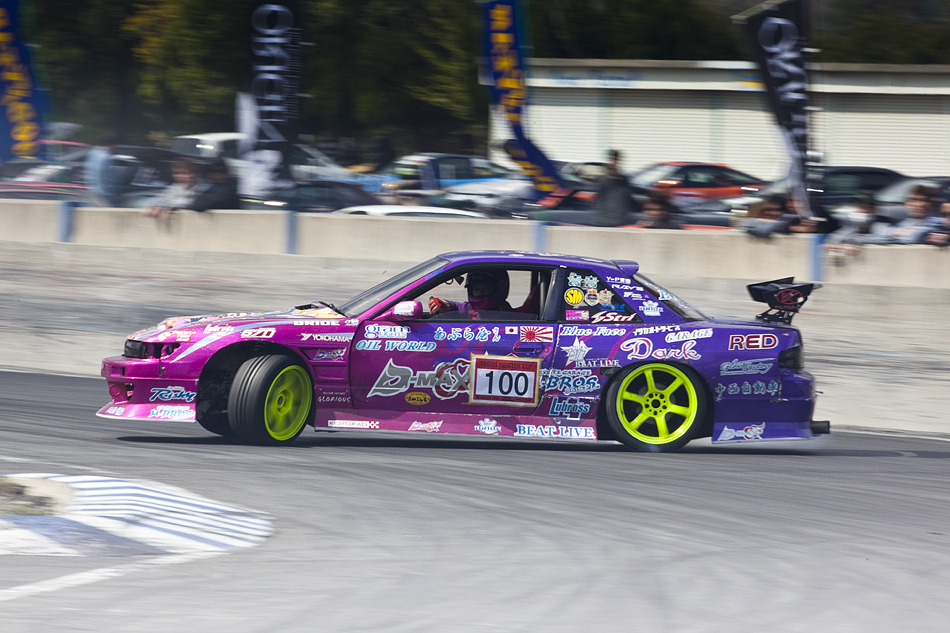
We have showed you some backwards entries a few days ago. We have asked one of our Japanese contacts to give us some tips regarding these backwards entries. We will discuss these today.
Labels:
Drift,
Driving skills,
handling
Saturday, May 14, 2011
The advantages of kei-cars
Here at low profile we see that most drivers prefer to go for bigger and better. We have seen crx drivers switching to skylines and renault 19 drivers that move to lancia delta's. But what if you do exactly the opposite? It might appear that 'less is more' might be more accurate than 'bigger is better'.
Labels:
handling,
suspension
Saturday, May 7, 2011
Top 10 basic performance mods
We have never thought it would be nessecary, but we have gotten quite a few mails wether we could discuss some basic mods. Mods you can do yourself without much trouble and which have good result. As you see we have listened and we have made a list of 10 mods that are easy to do or should be quitte high on your list of first mods on your car.
Monday, February 7, 2011
Chassis bracing - Part 1
How do strut bars and sway bars work? We will discuss the basic parts like strutbars and swaybars. ultra racing has some useful pictures which we will use for the more visual oriented people.
First we will discuss strutbars. If you are driving across uneven roads your wheel tubs will twist a bit. This is really noticable if one damper gets compressed more than the other. You will notice that your car will be a bit laggy and feel like a boat when cornering and driving on rough roads.
After installing strutbars the force gets evenly distributed to the other wheel tub. therefore the car will be more stable while driving on rough roads and whilst cornering.
You can also reinforce the front end of the car. It is one of the least strong parts and it will flex a lot when driving over bumps.
In zeer zeldzame gevallen kan dit zelfs schade veroorzaken aan de auto, maar naar mijn weten is dit zeer zeldzaam.
After installing an A-bar or fender bar the forces will be distributed more evenly. We have tested this modification on several cars and it often more noticable than regular strutbars.
If you are racing longer vehicles it might be possible that the car will flex between the wheels. This mostly occurs with 4 door saloons and shooting brakes. This will hardly happen with smaller vehicles like the s12, crx or ae86.

When in stalling lower bars on the car will increase the rigidity. It would be even better to have an X shaped bar underneath the car but this is usually not possible because of practical reasons.
Something that has been seen a lot as well are floor bars. These bars will absorb lateral forces and will mostly have use with bigger cars. Another reason for installing these is because your car will be safer during a crash.
We often get the question which brand of strutbraces is the best. The answer for this is simple; look at the design. It does not matter which brand you will buy and it might even be that a ebay special strutbar is better than a spoon strut bar. The first thing you have to pay attention to is wether the strut bar is 2 point or multipoint. A multipoint strutbar will always be better. Multipoint strutbars should always be triangulated for maximum result.Strutbars with separate brackets will be easy to install or remove but they will not to a good job like a 1 piece strutbar. Finally you should take a look at the material used. Steel for example is stronger than aluminum. Carbon fiber is also strong but 1 piece carbon strutbars are rare. It will always be a choice wether you want light weight/looks/or function.
Labels:
handling,
interior,
suspension
Tuesday, January 4, 2011
Corner weighting - How does it work?
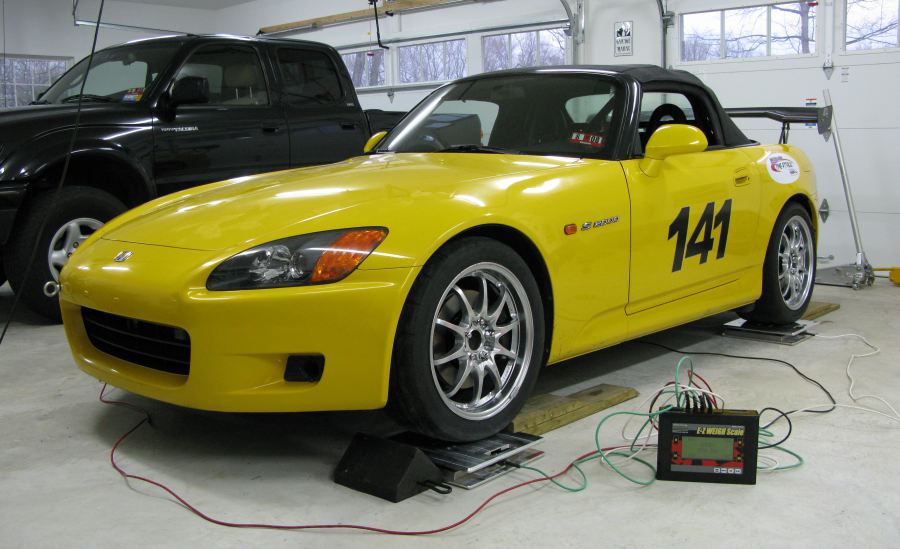
If yoy think about tuning your suspension, most people think about strut bars, swaybars and lowering. Something people dont know is that you can improve the weight distribution by adjusting the height if the car. This is callled corner weighting. This time we will tell you how it works.
Monday, January 3, 2011
aerodynamics - everything you want to know
People usually put spoilers on cars without realising what it will do. They dont know how it works and use their butt dyno to see results. This time we will discuss how it actually works.
For cutting-edge aerodynamics on production-based cars, look no further than Germany's DTM and Japan's Super GT cars. Both series have rules allowing significant use of aero aids (such as multi-element wings, diffusers, super-low side skirts, air dams, and splitters) while keeping reasonably faithful to the cars' original lines. These components combine to produce prodigious amounts of downforce, helping to keep the car planted through corners at ballistic speeds. They also improve braking performance and acceleration thanks to the added traction.
There is a price for this amount of downforce. Drag. Redirecting the energy of the airflow to hold a car down creates more resistance for the car to push against. But that's OK. Although drag reduces top speed somewhat, the increase in cornering speeds makes for faster lap times, so some drag is acceptable. Many race cars have drag coefficients of over 1.1, while modern production cars hover around 0.35. The big difference is that race cars have enough horsepower to compensate.
The key is to produce just enough downforce to maximize the average speed around the track. Produce too much downforce and the increased drag will slow the car excessively, too little downforce will hurt cornering speeds. It usually takes some experimenting with wing settings and other components to find the sweet spot where performance is optimized.
Keep in mind that the basic shape of a production car generates a lifting force when moving through air. The lift characteristics increase exponentially (to the second power) as speed increases. As a result, traction at high speed is reduced and the car's handling can become vague and unresponsive, especially when cornering. By adding downforce, some or all of this unwanted lift can be reduced.
Several aero components are mounted nearer the front, others are usually located closer to the rear. For example, a wing is usually mounted on the trunk lid; an air dam is attached to the front bumper cover. The effect produced by the component will generally be concentrated near to where it's mounted. Consequently, the rear tires will 'feel' more of the wing's downforce than the front tires. Since a wing is usually mounted behind the rear wheels, there will usually be a decrease in the load acting on the front tires due to the fulcrum effect; downforce from the wing will actually lift the front of the car.
Wednesday, November 24, 2010
Racing with or without ABS
Racing with or without abs is a subject that had been discussed many times without a definitive answer. In this blog we will tell what are the advantages and disadvantages of racing with ABS.
Labels:
braking,
handling,
suspension
Tuesday, November 23, 2010
Lightweight part 2
In lightweight part 1 we have already told you wat you can install or remove to make your car lighter. This time we will continue more about the laws involved and what you can do depending on race type.
Sunday, November 21, 2010
Reducing weight - part 1
Weight loss is an easy way to increase your acceleration times. However it is not as easy as it seems. This time we will tell you some ways to make your car lighter and we will give you some tips about what to do and what not to.
Subscribe to:
Posts (Atom)